Teacher Bullying and Mathematics Attainment: The Mediating Roles of Psycho-Socio-Emotional Factors in South-East Nigeria (Path Analysis)
https://doi.org/10.63081/uejtl.v3i1.137
Bullying, Mathematics attainment, School, Students and teachers
Abstract
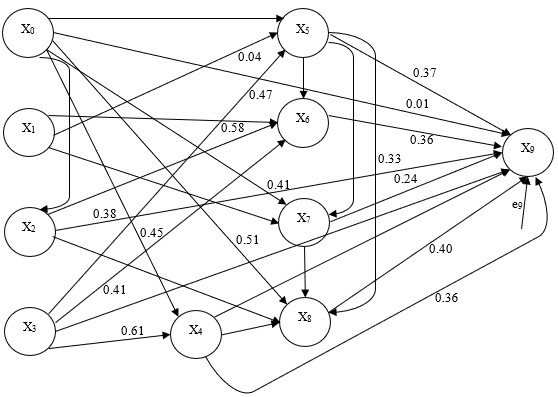
This study investigated teacher bullying and mathematics attainment: The mediating roles of psycho-socio-emotional factors in South-East, Nigeria. The study adopted the ex-post facto research design with a sample of 2,150 Senior Secondary School Students who reported teacher bullying, had low math scores, and received counselling from their school counsellors based on their experience of bullying. Ten valid instruments have been used. Two research questions were answered at the 0.05 level of significance. Data were analysed using multiple regression (backward solution) and path analysis. The result revealed in order of magnitude shows that emotional intelligence had the highest mediating effect (16.48%) on mathematics attainment of secondary school students bullied by teachers. This is followed by self-esteem (15.65%); readiness to learn (15.22%); self-efficacy (14.83%); interest in schooling (14.83%); teacher-student consultation (13.57%) on mathematics attainment of secondary school students bullied by teachers. Also, the entire psycho-socio-emotional mediating factors were shown to contribute differentially to the mathematics attainment of secondary school students bullied by teachers. Specifically, emotional intelligence mediated most significantly to the explained variation on mathematics attainment (β = 0.23, p < .001). This is followed in magnitude of beta weights by mathematics anxiety (β = 0.18, p < .01); self-efficacy (β = 0.16, p < .05); teacher-student consultation (β = 0.08, p < .05); Interest in school (β = 0.08, p < .05); Readiness to learn (β = 0.06, p < .05). However, the mediating effect of self-esteem (β = -0.04, p < .05), dejection (β = -0.02, p < .05) and achievement motivation (β = -0.02, p < .05) were not significant on mathematics attainment of students bullied by their teachers. Therefore, it was recommended that mathematics teachers in secondary schools should endeavour to use appropriate teaching methods and communication skills that would address the learning and developmental needs of students.
References
Aleta, B.T. (2016). Engineering Self-Efficacy contributing to the academic performance of AMAIUB engineering students: A qualitative investigation. Journal of Education and Practice, 7(27) 53-61. https://files.eric.ed.gov/fulltext/EJ1115938.pdf
Aremu, A. O. & Hammed. A. (2002). Ibadan Multi-Dynamic Inventories of Achievement Motivation. Stirling-Horden Publishers (Nig.) Ltd.
Asher, H. B. (1977). Causal modeling. Newbury Park, CA: Sage. Atran, Science.
Asher, S. R. & Wheeler, V. A. (1985). Children's loneliness: A comparison of rejected and neglected peer status. Journal of Consulting and Clinical Psychology, 53(4), 500-505. https://doi.org/10.1037/0022-006X.53.4.500
Awan, R., Noureen, I. & Naz, A. (2011). A study of relationship between achievement motivation, self-concept and achievement in English and Mathematics at secondary level. International Education Studies, 4(3): 72-79. https://doi.org/10.5539/ies.v4n3p72
Balluerka, N., Aliri, J., Goñi-Balentziaga, O, & Gorostiaga, A. (2023). Association between bullying victimization, anxiety and depression in childhood and adolescence: the mediating effect of self-esteem. Revista de Psicodidáctica 28(1):26–34. https://doi.org/10. 1016/j. psicod.2022.10.001
Bandura, A. (2010). Self-efficacy: The Corsini Encyclopedia of Psychology, American Cancer Society, pp. 1–3, https://doi.org/10.1002/9780470479216.corpsy0836
Beran, T. (2009). Correlates of peer victimization and achievement: An exploratory model. Psychology in the Schools, 46(4):348–361. https://doi.org/10.1002/pits.20380.
Beaudoin, E., Blackburn, S., Hove, I., & Sladeczek, I. (2024). Interventions targeting anxiety in individuals with learning disabilities: a scoping review. Learning Disabilities Research & Practice, 40(2): 96-111. https://doi.org/:10.1177/09388982241295772
Ben Palmer D., Stough, C., Stefan, K., & Luebbers, S. (2003). Adolescent emotional intelligence. Center for Neuropsychology, Swinburne University of Technology.
Biswas, T., Scott, J. G., Münir, K., Thomas, H. J., Huda, M. M., Hasan, M. M., De Vries, T. D., Baxter,J., & Mamun, A. A. (2020). Global variation in the prevalence of bullying victimisation amongst adolescents: Role of peer and parental supports. E-Clinical Medicine, 20, Article 100276, https://doi.org/10.1016/j.eclinm.2020.100276
Bowser, J., Larson, J. D., Bellmore, A., Olson, C., & Resnik, F. (2018). Bullying victimization type and feeling unsafe in middle school. The Journal of School Nursing, 34(4), 256–262. https://doi.org/10.1177/1059840518760983
Broeckelman Post, M. A., Tacconelli, A., Guzmán, J., Rios, M., Calero, B., & Latif, F. (2016). Teacher misbehavior and its effects on student interest and engagement. Communication Education, 65(2), 204–212. https://doi.org/10.1080/03634523.2015.1058962
Carrasco, D., Banerjee, R., López-Hornickel, N., & Treviño, E. (2022). Indirect effects of bullying on school mathematics achievement in Chile. Studies in Educational Evaluation, 74:101172. https://doi.org/10.1016/j.stueduc.2022.101172 .
Chen, L. M., Liu, K. S., & Cheng, Y. Y. (2012). Validation of the perceived school bullying severity scale. An International Journal of Experimental Educational Psychology, 32 (2) 16-182 https://doi.org/10.1080/01443410.2011.633495
Cristine, L. (2024). Loneliness: Understanding the Complex Factors and Causes. International Journal of School and Cognitive Psychology, 11(7)1-2
Erdoğdu, M. (2013). Ana-baba tutumları ve öğretmen davranışları ile öğrencilerin akademik başarıları arasındaki ilişkiler [Relationships between parental attitudes and teacher behaviors and students' academic achievement]. Sakarya University Journal of Education Faculty, 14, 33-46.
Espinoza, G., Gonzales, N. A., & Fuligni, A. J. (2013). Daily school peer victimization experiences among Mexican-American adolescents: Associations with psychosocial, physical, and school adjustment. Journal of Youth and Adolescence, 42(12):1775–1788. https://doi.org/10.1007/s10964-012-9874-4
Finestone, P. (1984). A construct validation of the Self-Directed Learning Readiness Scale with labour education participants (Doctoral dissertation, University of Toronto). Dissertation Abstracts International, 46, 5A.
Forsberg, C., Sjögren, B., Thornberg, R., Jun, S., & Longobardi, C. (2024). Longitudinal reciprocal associations between student-teacher relationship quality and verbal and relational bullying victimization. Soc Psychol Educ, 27:151–73. https://doi.org/10.1007/s11218-023-09821-y
Gilliom, M. & Shaw, D. S. (2004). Codevelopment of externalizing and internalizing problems in early childhood. Development and Psychopathology. Spring, 16, 313–333 https://doi.org/10.1017/S0954579404044530.
Goodboy, A. K., Martin, M. M., & Goldman, Z. W. (2016). Students’ experiences of bullying in high school and their adjustment and motivation during the first semester of college. Western Journal of Communication, 80(1), 60-78. https://doi.org/10.1080/10570314.2015.1078494
Graham, M. A. (2025). Traditional bullying and cyberbullying as main drivers of low mathematics achievement in South African schools: Evidence from TIMSS 2019. Education Inquiry, 16(2), 157–176. https://doi.org/10.1080/20004508.2023.2173122
Halliday, S., Gregory, T., Taylor, A., Digenis, C., & Turnbull, D. (2021). The impact of bullying victimization in early adolescence on subsequent psychosocial and academic outcomes across the adolescent period: A systematic review. Journal of School Violence, 20(3), 351–373. https://doi.org/10.1080/15388220.2021.1913598
Hidajat, H. G., Hanurawan, F., Chusniyah, T., & Rahmawati, H. (2020). Why I’m bored in learning? Exploration of students’ academic motivation. International Journal of Instruction, 13(3), 119–136. Scopus. https://doi.org/10.29333/iji.2020.1339a
Huang, L. (2022). Exploring the relationship between school bullying and academic performance: the mediating role of students’ sense of belonging at school. Educational Studies, 48 (2) 1–17 https://doi.org/10.1080/03055698.2020.1749032
Huang, S. T., & Vidourek, R. A. (2019). Bullying victimization among Asian-American youth: A review of the literature. International Journal of Bullying Prevention, 1(3), 187– 204. https://doi.org/10.1007/s42380-019-00029-3.
Ighaede-Edwards, I. G., Liu, X., Olawade, D. B., Ling, J., Odetayo, A., & David-Olawade, A. C. (2023). Prevalence and predictors of bullying among in-school adolescents in Nigeria. Journal of Taibah University Medical Sciences, 18 (6) 1329-1341 https://doi.org/10.1016/j.jtumed.2023.05.009,
Ismail, A. R., Sulaiman, S. B., Adebowale, A. S., Chukwuma, D. U., Mu’awiyyah, B. S., Auwal, U. A., & Kabir, S. (2021). Predictors of bullying perpetration among adolescents attending secondary schools in Sokoto Metropolis, Nigeria, 2019: Pan African Medical Journal (19) 39-49: https://doi.org/10.11604/pamj.2021.39.49.22690
Jayanthi, R. (2019). Mathematics in Society Development - A Study: Iconic Research and Engineering Journals Volume 3 Issue 3 2019 Page 59-64 https://www.irejournals.com/formatedpaper/1701630.pdf
Kelly, E.V., Newton, N.C., Stapinski, L.A., Slade, T., Barrett, E. L., Conrod, P.J. & Teesson, M. (2015). Concurrent and prospective associations between bullying victimization and substance use among Australian adolescents. Drug Alcohol Depend, 154, 63–68. https://doi.org/10.1016/j.drugalcdep.2015.06.012
Kerlinger, F., & Lee, H. (2000). Foundations of behavioral research. Orlando, FL: Harcourt College Publishers.
Kochenderfer, B. J, & Ladd, G. W. (1996). Peer victimization: Cause or consequence of school maladjustment?. Child Development, 67(4):1305–1317 https://doi.org/10.2307/1131701
Kubwalo, H. W., Muula, A. S., Siziya, S., Pasupulati, A., & Rudatsikira, E. (2013). Prevalence and correlates of being bullied among in-school adolescents in Malawi: Results from the 2009 global school-based health survey: Malawi Medical Journal, 25 (1). 12-14
Mancini, G., Roberta, B., Dana, J., Elena, T, & Federica, A. (2022). Emotional intelligence: Current research and future perspectives on mental health and individual differences. Frontiers in Health Psychology 13: 1049431. https://doi.org/10.3389/fpsyg.2022.1049431
McCurdy, B. L., Mannella, M. C., & Eldridge, N. (2003). Positive behavioral support in urban schools: Can we prevent the escalation of antisocial behavior? Journal of Positive Behavior Interventions, 5, 158-170. https://doi.org/10.1177/10983007030050030501
McPherson, R. H., Schwartz, J., & Passe, S. (2011). Improving student achievement by improving student behavior: Prevention in action. Hellenic Journal of Psychology, 8(3), 359-373. https://pseve.gr/wp-content/uploads/2018/03/Volume08_Issue3_McPherson.pdf
Menggo, S., Jem, Y. H., Guna, S., & Beda, R. (2023). Watch and Practice: Effectiveness of Using WhatsApp as a Multimedia Tool in Boosting Speaking Competence during the COVID-19 Pandemic in Indonesia. International Journal of Information and Education Technology, 13(1), 143–150. Scopus. https://doi.org/10.18178/ijiet.2023.13.1.1789
Moon, J., & Mello Z., R. (2021). Time among the taunted: the moderating effect of time perspective on bullying victimization and self-esteem in adolescents. Journal of Adolescence 89:170–182. https://doi.org/10.1016/j.adolescence.2021.05.002
Moors, A., Phoebe, C., Ellsworth, K. R., S, & Nico H. F. (2013). Appraisal theories of emotion: state of the art and future development. Emotion Review 5: 119–124. https://doi.org/10.1177/1754073912468165
Morgan, V., & Jinks, J. (1999). Children's perceived academic self-efficacy: An inventory scale. The Clearing House: A Journal of Educational Strategies, Issues and Ideas, 72 (4), 224-230 https://doi.org/10.1080/00098659909599398
Mukminatien, N., Saukah, A., & Prayogo, J. A. (2019). Word recognition from speech, syntactic knowledge, metacognitive awareness, self-efficacy as determination for l2 listening comprehension. International Journal of Instruction, 12(3), 89–104. Scopus. https://doi.org/10.29333/iji.2019.1236a
Murphy, D., Leonard, S. J., Taylor, L. K., & Santos, F. H. (2022). Educational achievement and bullying: The mediating role of psychological difficulties. The British journal of educational psychology, 92 (4):1487–1501. https://doi.org/10.1111/bjep.12511.
Nakamoto, J., & Schwartz, D. (2010). Is Peer victimization associated with academic achievement? A meta-analytic review. Social Development 19:221–242. https://doi.org/10.1111/j.1467-9507.2009.00539.x
Obioha, W. C., Obi, C. J. V., Nnamani, K. E., Chima, U. E., Mefoh, P. C., Okoye, K. M. (2024). Interparental violence and school bullying among Nigerian adolescents: Moderating role of psychological resilience. Child Protection and Practice (1) 1-9 https://doi.org/10.1016/j.chipro.2024.100010
Ogboghodo, E. O., Omuemu, V. O., Esene, H. A., Oko-oboh, G. A., Isara, A. R., & Isah, E. C. (2018). A Comparative Assessment of Bullying Among in-school Adolescents in an Urban and Rural Setting in Southern Nigeria. The Nigerian Health Journal, 17(4), 135-147. https://doi.org/10.60787/tnhj.v17i4.332
Okoiye, O. E. (2011). Effectiveness of cognitive and group behaviour therapies in managing examination anxiety among academically-at-risk secondary school students in ibadan, oyo state, Nigeria. Journal of Research in Education and Society 2, (2), 55-64
Okoiye, O. E., Anokam, E. O., & Nwoga, A. N. (2016). Academic self-efficacy, examination anxiety and peer influence as correlates of academic achievement motivation of secondary school students in Benin Edo State Nigeria. The Educational Psychologist, A Journal of the Nigerian Council of Educational Psychologist, 10 (1) 117-131.
Okoiye, O. E., & Asamaigo, E, E. (2011). Family factors, self-esteem and peer involvement as predictors of dyscalculia among students with learning disabilities in Ikeja, Lagos state of Nigeria. Journal of Research in Education and Society; 2, (2), 96-106 Retrieved from https://icidr.org.ng/index.php/Jres/article/view/1213
Okoiye, O. E., & Onah, T. A. (2024). Design and mathematics efficacy as correlates of engineering students’ exposure to career interest inventory assessment and testing via vocational counselling in Edo State. Nigerian Journal of Educational Research and Evaluation (23) 1-14.
Okoiye, O. E., Ukah, P. N, & Nwoga, A. (2013). Effects of rational emotive behaviour therapy and emotional intelligence on mathematics anxiety of in-school adolescents in Owerri Municipal Nigeria. European Journal of Sustainable Development, 2, (3), 85-98 https://doi.org/10.14207/ejsd.2013.v2n3p85
Oliveira, F. R., de Menezes, T. A., Irffi, G, & Oliveira, G. R. (2018). Bullying effect on students’ performance. Economia, 19 (1) 57-73 https://doi.org/10.1016/j.econ.2017.10.001
Olweus, D., Limber, S.P., & Breivik, K. (2019). Addressing Specific Forms of Bullying: A Large-Scale Evaluation of the Olweus Bullying Prevention Program. International. Journal of Bullying Prevention, 1, 70–84 https://doi.org/10.1007/s42380-019-00009-7
Park S, Lee, Y., Jang, H., & Jo, M. (2017). Violence Victimization in Korean Adolescents: Risk Factors and Psychological Problems. International Journal of Environmental Research and Public Health: 14 (5),541; https://doi.org/10.3390/ijerph14050541
Pianta, R. C. (2001). Student-Teacher Relationship Scale: Professional manual. Odessa, FL:Psychological Assessment Resources, Inc. file:///C:/Users/PC/Downloads/STRS_Professional_Manual.pdf
Romero-Canyas, R., Downey, G., Berenson, K., Ayduk, O., & Kang, N. J. (2010a). Rejection sensitivity and the rejection-hostility link in romantic relationships. Journal of Personality, 78 (1), 119- 148. https://doi.org/10.1111/j.1467-6494.2009.00611.x
Roorda, D. L, & Koomen, H. M. Y. (2021). Student-teacher relationships and students’ externalizing and internalizing behaviors: a cross-lagged study in secondary education. Child Development.; 92 (1):174–88. https://doi.org/10.1111/cdev.13394.
Rosenberg, M. (1965). Society and the adolescent self-image. Princeton, NJ. Princeton University Press. https://doi.org/10.1515/9781400876136
Rusteholz, G., Mediavilla, M., & Pires, L. (2023). Bullying as determinant of academic performance. A case study for the Community of Madrid using administrative data. Journal of School Violence, 22 (2) 1-17. https://doi.org/10.1080/15388220.2023.2186416
Ryan, R. M., & Deci, E. L. (2000). "Self-determination theory and the facilitation of intrinsic motivation, social development, and well-being". American Psychologist. 55 (1): 68–78. https://doi.org/10.1037//0003-066x.55.1.68
Sahakian, T. (2024). Young adults, self-esteem, psychological well-being, and positive psychology (Doctoral dissertation, The Chicago School of Professional Psychology). ProQuest Dissertations Publishing. https://www.proquest.com/openview/658a12f526cf2e86efe7569c0689ddd3/1?pqorigsite=gscholar&cbl=18750&diss=y.
Sigurdson, J. F., Undheim, A. M., Wallander, J. L., Lydersen, S., & Sund, A. M. (2015). The long-term effects of being bullied or a bully in adolescence on externalizing and internalizing mental health problems in adulthood. Child and adolescent psychiatry and mental health, 9, 42. https://doi.org/10.1186/s13034-015-0075-2
Strøm, I. F., Thoresen, S., Wentzel-Larsen, T., & Dyb, G. (2013). Violence, bullying and academic achievement: A study of 15-year-old adolescents and their school environment. Child. Abus. Negl, 37, 243–251. https://doi.org/10.1016/j.chiabu.2012.10.010.
Suinn, R. M., & Winston, E. H. (2003). The Mathematics Anxiety Rating Scale, a brief version: Psychometric data. Psychological Reports, 92, 167-173. https://doi.org/10.2466/pr0.2003.92.1.167
Sürücü, A. & Ünal, A. (2018). Investigation of teacher behavior increasing and reducing student motivation. OPUS International Journal of Society Researches, 8(14), 253-295. https://doi.org/10.26466/opus.404122
Tolu-Kolawole, D. (2021). Ministry probes alleged beating of Abuja pupil to death: Punch Newspaper Report https://punchng.com/ministry-probes-alleged-beating-of-abuja-pupil-to-death/
Umoinyang, I. E. (1999). Student socio-psychological factors As Determinants of Achievement in Senior Secondary School Mathematics: An unpblished PhD Thesis, Institute of Education University of Ibadan.
Ünal, M. (2017). Preferences of teaching methods and techniques in mathematics with reasons. Univers J Educ Res 5(2):194–202 https://doi.org/10.13189/ujer.2017.050204
Vaillancourt, T., Brittain, H. L., McDougall, P., & Duku, E. (2013b). Longitudinal links between childhood peer victimization, internalizing and externalizing problems, and academic functioning: Developmental cascades. Journal of Abnormal Child Psychology. 41 (8):1203–1215. https://doi.org/10.1007/s10802-013-9781-5.
van Geel, M., Goemans, A., Zwaanswijk, W., Gini, G., & Vedder, P. (2018). Does peer victimization predict low self-esteem, or does low self-esteem predict peer victimization? Meta-analyses on longitudinal studies. Developmental. Review, 49, 31–40. https://doi.org/10.1016/j.dr.2018.07.001
Wolfe, L. M. (1977). An Introduction to Path Analysis. Multiple Linear Regression Viewpoints 8: 36-61.
Yu, S., & Zhao, X. (2021). The negative impact of bullying victimization on academic literacy and social integration: Evidence from 51 countries in PISA. Social Sciences & Humanities Open, 4 (1), 1-15 https://doi.org/10.1016/j.ssaho.2021.100151
Downloads
Published
How to Cite
Issue
Section
License
Copyright (c) 2026 OKOIYE Emmanuel Ojaga

This work is licensed under a Creative Commons Attribution-NonCommercial 4.0 International License.