Are Feedback and Reinforcement Questions in The Recitation Program Able to Improve Students' Conceptual Mastery?
https://doi.org/10.63081/uejtl.v1i4.72
Multi-context, Multi-representation, Recitation program, Students' conceptual mastery
Abstract
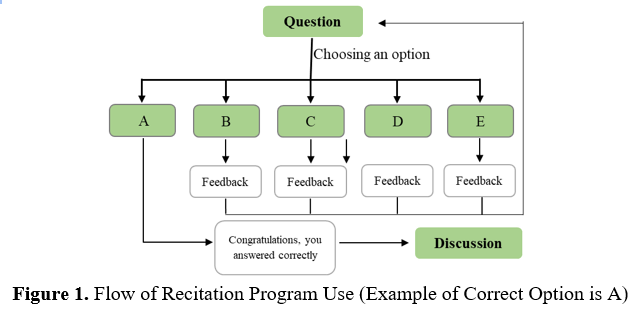
One of the primary goals of physics education is to achieve a solid conceptual understanding among learners. This conceptual understanding, which enables students to address the challenges they encounter effectively, is conceptual mastery. A higher level of conceptual mastery correlates with an increased capacity for students to tackle everyday problems successfully. This study aims to identify the improvement of students' conceptual mastery through a multi-representation-based recitation program accompanied by feedback and reinforcement questions. The method used in this research is descriptive quantitative, carried out on 36 students of the Physics Undergraduate Study Program. The recitation program is multi-representational and multi-context-based, which contains reinforcement questions and feedback used by students outside of lecture hours to help master the concepts obtained in class. The results showed the mastery of concepts of momentum and impulse students increased, indicated by the transition of student's answers and the average of students from 30.8 to 52.8. The increase in students' mastery of concepts is shown in questions in the context of determining impulses in related problems and the conservation of momentum in related problems. The multi-representation and multi-context presented in the recitation program and pretest and posttest questions affect students' mastery of concepts in solving problems.
References
Adimayuda, R., Sari, L., Ismail, A., Amalia, I. F., Gumilar, S., & Samsudin, A. (2021). Assessing two-dimensional collisions second-years students using PhET simulations on momentum and impulse concept. Journal of Physics: Conference Series, 1869(1). https://doi.org/10.1088/1742-6596/1869/1/012204
Affriyenni, Y., Swalaganata, G., Kurniawan, B. R., & Taqwa, M. R. A. (2021). Development of Android-based application: An effort to enhance students’ conceptual understanding in fundamental physics. AIP Conference Proceedings, 2330(March). https://doi.org/10.1063/5.0043428
Agustina, K., Kristiyanto, W. H., & Noviandini, D. (2017). Learning design of problem based learning model based on recommendations of sintax study and contents issues on physics impulse materials with experimental activities. International Journal of Active Learning, 2(2), 68–81. https://doi.org/10.15294/ijal.v2i2.10802
Andriani, R. D., Sunyono, & Abdurrahman. (2018). enhancing student s ’ activity and science concept mastery using guided inquiry-based practical manual. Jurnal Pendidikan Progresif, 8(1), 1–9. https://doi.org/10.23960/jpp.v8.i1.201801
Anon, D. T., & Mursyid, S. (2016). Remediasi miskonsepsi pada perpindahan kalor menggunakan model direct instruction berbantuan media animasi di man. Jurnal Pendidikan Dan Pembelajaran Khatulistiwa, 5(12), 1–14. https://doi.org/10.26418/jppk.v5i12.17813
Arisanti, W., Sopandi, W., & Widodo, A. (2016). Analisis penguasaan konsep dan keterampilan berpikir kreatif siswa sd melalui project based learning. Jurnal Pendidikan Dasar, 8(1). https://ejournal.upi.edu/index.php/eduhumaniora/article/view/5125/3586
Auna Hidayati, R., & Taqwa, M. R. A. (2023). Computer based recitation program development with feed back in newton’s law topic. International Journal of Education and Teaching Zone, 2(1), 113–129. https://doi.org/10.57092/ijetz.v2i1.49
Azizah, Z., Taqwa, M. R. A., & Assalam, I. T. (2020). Analisis pemahaman konsep fisika peserta didik menggunakan instrumen berbantuan quizizz. Jurnal Pendidikan Sains & Matematika, 8(2), 1–11. https://doi.org/10.23971/eds.v8i2.1707
Badruzzaman, D. R., Kaniawati, I., & Utari, S. (2015). Profil konsistensi representasi dan konsistensi ilmiah siswa sma negeri di kota bandung pada materi kinematika gerak lurus. Seminar Nasional Fisika (SINAFI), November, 26–38.
Bao, L. (2006). Theoretical comparisons of average normalized gain calculations. American Journal of Physics, 74(917), 917–922. https://doi.org/10.1119/1.2213632
Creswell, J. W., & Clark, V. L. P. (2007). Research design: Qualitative, quantitative, and mixed methods approaches. In Sage Publications.
De Cock, M. (2012). Representation use and strategy choice in physics problem solving. Physical Review Special Topics - Physics Education Research, 8(2), 1–15. https://doi.org/10.1103/PhysRevSTPER.8.020117
Dianningrum, M. C., Sutopo, & Hidayat, A. (2020a). Students’ understanding of circular motion with multi representational approach. AIP Conference Proceedings, 2296(November). https://doi.org/10.1063/5.0031000
Dianningrum, M. C., Sutopo, & Hidayat, A. (2020b). Students ’ understanding of circular motion with multi representational approach. International Conference on Science and Apllied Science (ISCAS2020), 2296(020102). https://doi.org/10.1063/5.0031000
Diyana, T. N., Sutopo, & Sunaryono. (2020a). Concept enhancement of undergraduate students in static fluid by using assisted web-based recitation program. AIP Conference Proceedings, 2296. https://doi.org/10.1063/5.0031001
Diyana, T. N., Sutopo, & Sunaryono. (2020b). The effectiveness of web-based recitation program on improving students’ conceptual understanding in fluid mechanics. Jurnal Pendidikan IPA Indonesia, 9(2), 219–230. https://doi.org/10.15294/jpii.v9i2.24043
Docktor, J. L., & Mestre, J. P. (2014). Synthesis of discipline-based education research in physics. Physical Review Special Topics - Physics Education Research, 10(2), 1–58. https://doi.org/10.1103/PhysRevSTPER.10.020119
Fayanto, S., & Juni, D. (2020). Physics teaching: development of lectora inspire with multiple-representation approach to reduce of misconception. Physics Teaching: Development of Lectora, 4(2), 159–170. http://jurnal.abulyatama.ac.id/index.php/dedikasi
Hastuti, A., Sahidu, H., & Gunawan. (2016). Pengaruh model pbl berbantuan media virtual tehadap kemampuan pemecahan masalah fisika. Jurnal Pendidikan Fisika Dan Teknologi, 2(3), 129–135. https://doi.org/10.29303/jpft.v2i3.303
Hestenes, D., & Hestenes, D. (1997). Modeling Methodology for Physics Teachers. 935. https://doi.org/10.1063/1.53196
Heuvelen, A. Van, & Zou, X. (2001). Multiple representations of work–energy processes. American Association of Physics Teachers, 69(2), 184–194. https://doi.org/10.1119/1.1286662
Hwang, W. Y., & Purba, S. W. D. (2021). Effects of ubiquitous-physics app on students’ inquiry behaviors and learning achievements. Asia-Pacific Education Researcher, 31(4), 439–450. https://doi.org/10.1007/s40299-021-00585-7
Jayanti, I. B. R., Wartono, & Sutopo. (2016). Dampak program resitasi terhadap topik hukum iii newton. Jurnal Pendidikan: Teori, Penelitian, Dan Pengembangan, 1(2), 256–264. http://dx.doi.org/10.17977/jp.v1i2.6130
Kaniawati, I., Samsudin, A., Hasopa, Y., Sutrisno, A. D., & Suhendi, E. (2016). The influence of using momentum and impulse computer simulation to senior high school students’ concept mastery. Journal of Physics: Conference Series, 739(1). https://doi.org/10.1088/1742-6596/739/1/012060
Koenig, K. M., Endorf, R. J., & Braun, G. A. (2007). Effectiveness of different tutorial recitation teaching methods and its implications for TA training. Phys. Rev. ST Phys. Educ. Res., 3, 1–9. https://doi.org/10.1103/PhysRevSTPER.3.010104
Kohl, P. B., & Finkelstein, N. D. (2005). Student representational competence and self-assessment when solving physics problems. Phys. Rev. ST Phys. Educ. Res. 1, 010104, 1–11. https://doi.org/10.1103/PhysRevSTPER.1.010104
Kohl, P. B., Rosengrant, D., & Finkelstein, N. D. (2007). Strongly and weakly directed approaches to teaching multiple representation use in physics. Phys. Rev. ST Phys. Educ. Res. 3, 010108 1–10. https://doi.org/10.1103/PhysRevSTPER.3.010108
Lutfiyadi, M., & Budiyono, A. (2018). Pengaruh model pembelajaran problem based learning berbantuan media permainan kareka (kartu remi fisika) terhadap penguasaan konsep fisika siswa sma. National Conference on …, September, 247–254. http://proceeding.uim.ac.id/index.php/nacomse/article/view/173
Meltzer, D. E. (2005). Relation between students ’ problem-solving performance and representational format Relation between students ’ problem-solving performance and representational format. American Association of Physics Teachers, 73(5), 463–478. https://doi.org/10.1119/1.1862636
Michelini, M. (2019). Mathematics in Physics Education. In Mathematics in Physics Education. https://doi.org/10.1007/978-3-030-04627-9
Munfaati, Y. N., Haryoto, D., & Sutopo. (2014). Penerapan pembelajaran inkuiri terbimbing disertai resitasi pada materi kalor : studi kasus di sma negeri 1 ponorogo. Jurnal Online Universitas Negeri Malang, 1–12.
Nur’aini, D. A., Lestari, P. D., & Kurniawan, B. R. (2020). Pengembangan asesmen formatif berbasis komputer untuk mengetahui penguasaan konsep siswa pada materi hukum bernoulli. Jurnal Riset Pendidikan Fisika, 5(2), 106–112. https://dx.doi.org/10.17977/um058v5i2p106-112
Nurani, D. C., Sarwanto, S., & Rintayati, P. (2018). Influence of guided inquiry-based outdoor learning on the concept mastery of thematic learning by fourth-grade students at primary school. International Journal of Multicultural and Multireligious Understanding, 5(4), 485–491. http://dx.doi.org/10.18415/ijmmu.v5i4.207
Ogilvie, C. A. (2009). Changes in students ’ problem-solving strategies in a course that includes context-rich , multifaceted problems. 1–14. https://doi.org/10.1103/PhysRevSTPER.5.020102
Oktaviyanti, D., Tandililing, E., & Mahmuda, D. (2016). Remediasi miskonsepsi siswa menggunakan pembelajaran learning cycle 3e pada materi fluida statis di man. Jurnal Pendidikan dan Pembelajaran Khatulistiwa, 5(12), 1–12. https://doi.org/10.26418/jppk.v5i12.17765
Puspitaningtyas, E., Hasanah, S., Kusairi, S., & Purwaningsih, E. (2021). Physics students’ responses when asked to select and solve motion kinematics problems in various representations. AIP Conference Proceedings, 2330(March). https://doi.org/10.1063/5.0043437
Putranta, H., & Supahar. (2019). Synthesis of the Cognitive Aspects’ Science Literacy and Higher Order Thinking Skills (HOTS) in Chapter Momentum and Impulse. Journal of Physics: Conference Series, 1397(1). https://doi.org/10.1088/1742-6596/1397/1/012014
Rahmawati, I., & Sutopo. (2019). Computer-assisted recitation program to improve students’ conceptual understanding. AIP Conference Proceedings, 2194. https://doi.org/10.1063/1.5139829
Rahmawati, S., Kusairi, S., & Sutopo. (2019). Analisis penguasaan konsep siswa yang belajar materi momentum dan impuls berbasis scientific approach disertai formative assessment berbantuan WEB. Jurnal Pembelajaran Sains, 3(1), 1–6. http://dx.doi.org/10.17977/um033v3i1p1%20-%206
Ramadan, E. M., Jumadi, J., & Rahmawati, D. U. (2020). Physics online learning devices based on guided discovery model for high school class x on momentum and impulse material. Jurnal Penelitian & Pengembangan Pendidikan Fisika, 6(2), 163–172. https://doi.org/10.21009/1.06203
Riwanto, D., Azis, A., & Arafah, K. (2019). Analisis pemahaman konsep peserta didik dalam menyelesaikan soal-soal fisika kelas x mia sma negeri 3 soppeng. Jurnal Sains Dan Pendidikan Fisika, 15(2), 23–31. https://doi.org/10.35580/jspf.v15i2.11033
Rosa, G. C., Cari, C., Aminah, N. S., & Handhika, J. (2018). Students’ understanding level and scientific literacy competencies related to momentum and impulse. Journal of Physics: Conference Series, 1097(1), 0–8. https://doi.org/10.1088/1742-6596/1097/1/012019
Sadaghiani, H. R. (2011). Using multimedia learning modules in a hybrid-online course in electricity and magnetism. Physical Review Special Topics - Physics Education Research, 7(1), 1–7. https://doi.org/10.1103/PhysRevSTPER.7.010102
Saepuzaman, D., Karim, S., Feranie, S., Sari, I. M., & Sriyansyah, S. P. (2020). Pre-class tutorial (pct) to improve understanding of prospective physics teacher concepts in basic physics course. Proceedings of the 7th Mathematics, Science, and Computer Science Education International Seminar, MSCEIS 2019. https://doi.org/10.4108/eai.12-10-2019.2296495
Safitri, I., Kaniawati, I., & Rusnayati, H. (2020). Penerapan multirepresentasi pada pembelajaran inkuiri terbimbing terhadap penguasaan konsep dari gaya belajar. Jurnal Pendidikan Fisika Dan Teknologi, 6(2), 169. https://doi.org/10.29303/jpft.v6i2.1870
Saifullah, A. M., Sutopo, S., & Wisodo, H. (2017). Senior high school students’ difficulties in solving impulse and momentum problems. Jurnal Pendidikan IPA Indonesia, 6(1), 1–10. https://doi.org/10.15294/jpii.v6i1.9593
Silaen, S. S., Sudjito, D. N., & Sudarmi, M. (2019). Pengembangan tes diagnostik multi representasi eksternal (mre) untuk mengetahui profil kemampuan representasi konsep. Publikasi Pendidikan, 9(2), 98. https://doi.org/10.26858/publikan.v9i2.8477
Sugiyono. (2018). Metode Penelitian Kuantitatif. Alfabeta.
Sundari, P. D., Dewi, W. S., Saputra, D., Mairizwan, M.-, & Hidayat, R. (2021). The improvement of physics teachers’ competence in developing an interactive recitation programs to remediate students’ misconception. Indonesian Journal of Science and Mathematics Education, 4(3), 242–252. https://doi.org/10.24042/ijsme.v4i3.10053
Taqwa, M. R. A., & Hidayat, A. (2017). Deskripsi penggunaan program resitasi dalam meningkatkan kemampuan membangun free-body diagrams ( fbds ). Jurnal Pendidikan Fisika Tadulako Online, 5(1), 52–58. https://doi.org/10.22487/j25805924.2017.v5.i1.8411
Taqwa, M. R. A., Hidayat, A., & Sutopo, S. (2017). Konsistensi pemahaman konsep kecepatan dalam berbagai representasi. Jurnal Riset Dan Kajian Pendidikan Fisika, 4(1), 31. https://doi.org/10.12928/jrkpf.v4i1.6469
Taqwa, M. R. A., & Rahim, H. F. (2022). Students’ conceptual understanding on vector topic in visual and mathematical representation: a comparative study. Journal of Physics: Conference Series, 2309, 1–6. https://doi.org/10.1088/1742-6596/2309/1/012060
Taqwa, M. R. A., Zainuddin, A., & Riantoni, C. (2020). Multi representation approach to increase the students’ conceptual understanding of work and energy. Journal of Physics: Conference Series, 1567(3). https://doi.org/10.1088/1742-6596/1567/3/032090
Waldrip, B., Prain, V., & Carolan, J. (2006). Learning junior secondary science through multi-modal representations. Learning Junior Secondary Science through Multi-Modal Representations, 11(1). https://ejrsme.icrsme.com/article/view/7752
Xu, W., Liu, Q., Koenig, K., Fritchman, J., Han, J., Pan, S., & Bao, L. (2020). Assessment of knowledge integration in student learning of momentum. Physical Review Physics Education Research, 16(1), 10130. https://doi.org/10.1103/PHYSREVPHYSEDUCRES.16.010130
Downloads
Published
How to Cite
Issue
Section
License
Copyright (c) 2026 Handy Faishal Rahim, Iqbal Bilgrami Biruni, Teddy Amin Romansyah, Arif Hidayat, Sutopo

This work is licensed under a Creative Commons Attribution-NonCommercial 4.0 International License.